|
|
|
|
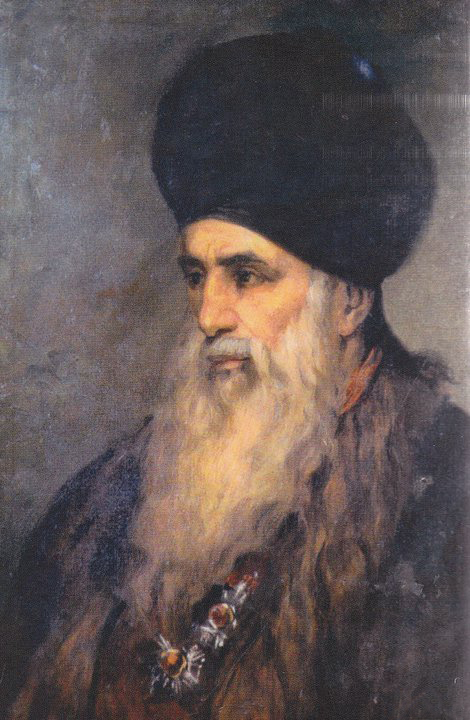 |
Moran Mor Ignatius Pathros (Peter) IV, who served as the supreme head of the Syrian Orthodox Church for twenty-two years (1872–1894), was the 116th in the unbroken line of canonical Patriarchs of Antioch in the Apostolic See of St. Peter. Although little is known about the early life of this holy father, his legacy is of enduring significance. He is widely regarded as one of the principal architects of the modern Syrian Church, whose leadership and vision helped shape its life and institutions in the modern era.
Born into a prominent Christian family in Turabdin, in south-eastern Turkey, Mor Pathros spent his childhood at the Mor Hananyo Dayro (Deir al-Zaʿfaran Monastery), which had served as the spiritual and administrative centre of the Syrian Orthodox Church for many centuries. It was also at this historic monastery that he received his priestly formation.
In 1846, Patriarch Mor Elias II ordained Kassisso Pathros as Metropolitan of Syria, giving him the episcopal name Mor Yulius. As diocesan Metropolitan, he played a significant role in resolving disputes with the Roman Catholic Church and in recovering several ancient monasteries and churches that had been the subject of prolonged contention.
While Mor Yulius was staying in Constantinople, his immediate predecessor, Patriarch Mor Yakub II, passed away. Owing to the difficulties of travelling to Mardin, he informed the Holy Synod that he was unable to attend the patriarchal election. The Synod, however, unanimously decided to elevate Mor Yulius to the Patriarchal See. Out of humility, he initially declined the honour and responsibility. Yet, after persistent persuasion, he finally consented to abide by the unanimous decision of the Holy Episcopal Synod and accept the patriarchal office.
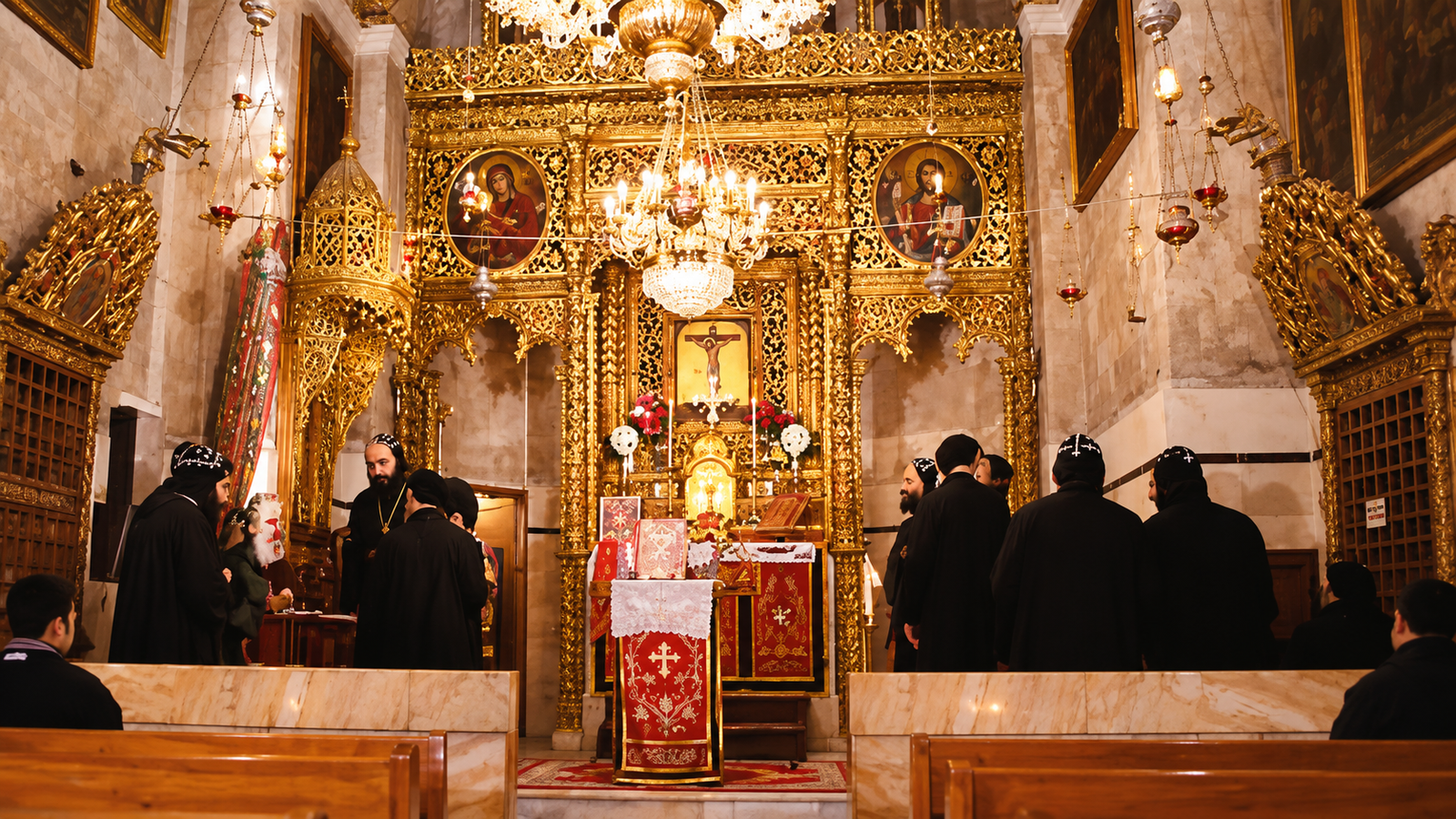
On 16 June 1872, the Feast of Pentecost, he was enthroned as the 116th Patriarch of Antioch at the ancient St. Mark's Dayro in Jerusalem. Following his enthronement, His Holiness travelled to Amida (Omid/Diyarbakir), where he stayed for a short period. During his stay, the Dayro there was reconstructed under his guidance and advice.
Later in 1872, His Holiness ordained Rabban Abdul Sattuf as a Metropolitan, giving him the episcopal name Mor Gregorios, and appointed him to the Archdiocese of Jerusalem. The Patriarch then proceeded to Constantinople, where his efforts on behalf of the Syrian Christian community brought about a significant political and ecclesiastical achievement. Through his persistent efforts, the Syrian Christians obtained direct representation in Constantinople and official recognition as an independent millet within the Ottoman Empire. They were also granted other special rights and privileges, thereby fulfilling long-standing aspirations of the community.
|
St. Mark's Syrian Orthodox Monastery in Jerusalem where the holy father was enthroned as the 116th Patriarch of Antioch & All the East in 1872 |
 |
The Patriarchal visit to Malankara (Malabar)
It was during the Patriarch’s stay in Constantinople that a letter from Pulikottil Mor Dionysius and Edavazikkal Philipose Kassisso from India reached the Patriarchate, urgently seeking the help and intervention of His Holiness. The letter brought to the Patriarch’s attention the severe trials and tribulations through which the Church in Malabar was passing at the time.
The situation had become particularly grave because of the activities of Mor Athanasius, who had been ordained by Patriarch Mor Yakub II but was subsequently propagating teachings contrary to the Orthodox faith. His actions had caused profound disruption within the Church in Malabar, creating serious divisions and placing the faithful under immense pressure. The need for decisive intervention and pastoral support from the Patriarchate had therefore become increasingly urgent.
In response to this urgent appeal, the Patriarch consulted with his fellow Metropolitans and, after careful deliberation, resolved to undertake a journey to England to appeal to the British Government on behalf of the Syrian Church in Malabar. It was a remarkable decision, particularly given that His Holiness was then seventy-four years of age. Before departing, the Patriarch met with the Sultan of the Ottoman Empire. He then set sail from Constantinople in August 1874, beginning the long and arduous journey to England. After a month at sea, he finally arrived in England in September 1874. His Holiness was accompanied on this demanding journey by Metropolitan Mor Gregorios Abdul Sattuf of Jerusalem, who shared in the hardships and responsibilities of the historic mission.
His Holiness first met with British Government officials and presented the case of the Syrian Church in Malabar. He also personally appealed to the Secretary of State for India, seeking the Government’s intervention in the difficulties confronting the Church. Initially, the Archbishop of Canterbury took a position unfavourable to the Patriarch’s appeal. He stated that he had been instructed by the bishops in India that Mor Athanasius should receive the support of the Church of England. The British Government, however, received the Patriarch’s representations sympathetically and instructed the Government of Madras to consider his case as favourably as possible. His Holiness was also provided with letters of introduction to assist him in pursuing his mission.
The Patriarch’s visit to England reached a particularly significant moment when Queen Victoria granted him two successive audiences, on 21 and 28, February 1875. These personal audiences with the Queen were a remarkable recognition of the Patriarch’s mission and standing. Her Majesty further honoured him by conferring a decoration upon him, adding a distinguished chapter to his historic visit to England.
The English public were deeply captivated by his remarkable personality. His profound piety, coupled with his extensive knowledge of the Bible, left a lasting impression wherever he went. Those who met him were struck by his extraordinary familiarity with Scripture. It was recorded that people remarked that he “knew the Old and New Testaments by heart” and that “his conversations were full of allusions to and quotations from the Bible.” Having earned the respect, goodwill, and support of many Englishmen who were not influenced by the position of the C.M.S. missionaries in Travancore, the Patriarch concluded his mission in England and set sail for India. (During this historic first visit of a Syrian Orthodox Patriarch to England, in the winter of 1874–75, Mor Peter IV took the opportunity to arrange for a printing press to be sent back to the Deir al-Zaʿfaran Monastery. Once the press had been installed, it was put to immediate and fruitful use, producing a number of liturgical and other works in Syriac).
In January 1875, Metropolitan Mor Dionysius once again wrote to the Patriarch, who was then in England, earnestly requesting him to visit Malankara. Responding to this repeated appeal, His Holiness set sail for India in April, travelling via Egypt, and reached Bombay towards the end of May. At Pune, Mor Dionysius met His Holiness the Patriarch, the supreme head of the Syrian Orthodox Church, and Metropolitan Mor Gregorios of Jerusalem. From Pune, the three travelled together by train to Madras to meet the Governor of Madras and present the case of the Syrian Christians of Malabar. On their arrival, however, they learned that the Governor was staying at Ootacamund (Ooty), his summer residence. They therefore proceeded to Ootacamund. At that time, there was no proper road beyond Mettupalayam, and the journey into the hills was particularly arduous. His Holiness, who was then about seventy-five years old, together with his companions, had to undertake a strenuous climb that lasted an entire day. The difficulty and hardship of this journey are recorded in the biography of Pulikottil Mor Dionysius Metropolitan, published in 1901.
At Ootacamund, His Holiness met with the Governor and presented in detail the grave difficulties facing the Syrian Christians of Malabar. The Governor was deeply impressed by the Patriarch’s account and assured him of his support and of every possible assistance to His Holiness and the Syrian Church in Malabar. The Patriarch and his companions remained at Ootacamund for three days before setting out for Malabar. Travelling by train, they reached Kunnamkulam in the middle of June. His Holiness received a rousing welcome at Arthat St. Mary’s Church, where he celebrated the Pentecost services. From Kunnamkulam, His Holiness proceeded towards Thiruvananthapuram, the capital of the erstwhile Travancore State, to meet the Maharaja. On the way, he spent ten days in Cochin. At every place he visited, the faithful gathered in large numbers to welcome their Patriarch. His arrival in Malabar was marked by an unprecedented outpouring of devotion and enthusiasm, reflecting the deep affection and reverence of the Syrian Christian community for its spiritual father.
Soon after the Patriarch’s arrival in Malabar (Malankara), a significant change took place in the legal and ecclesiastical position of the Syrian Church. The royal proclamation that had favoured Mor Athanasius and the C.M.S. missionaries was withdrawn by the Travancore State Government. A fresh decree was issued shortly thereafter, declaring that the Government would no longer interfere in the appointment or dismissal of bishops in the Syrian Church and directing all parties to settle their disputes through the recognized Civil Courts of the State.
This decision marked a restoration of the long-standing policy of religious toleration that had characterized the relationship between the rulers of Malabar and their Syrian Christian subjects. According to contemporary accounts, this tradition of religious freedom had prevailed from the early centuries of Christianity in Malabar, traditionally associated with the arrival of the Apostle St. Thomas, until the growing influence of European missionaries, both Roman Catholic and Protestant. On 4 March 1876, this principle was formally reaffirmed by the Travancore Government.
The decision was a serious setback for the C.M.S. missionaries, whose efforts to influence the Syrian Christian community had been closely connected with the ecclesiastical disputes of the period. For the Syrian Christians, however, the arrival of His Holiness Patriarch Peter IV was a moment of extraordinary significance. His presence generated immense enthusiasm throughout Malankara, and he was widely received with profound reverence and affection. The Patriarch was hailed by many of the faithful as a deliverer who had come to defend the rights and traditions of the Syrian Church. The withdrawal of the earlier proclamation also significantly weakened the position of Mor Athanasius, and several of those who had previously supported him withdrew their allegiance following the Patriarch’s arrival and the Government’s reversal of its earlier policy.
|
The Marthoman Church at Mulanthuruthy in India where the Holy father consecrated Holy Myron and convened the historic Synod in 1876 |
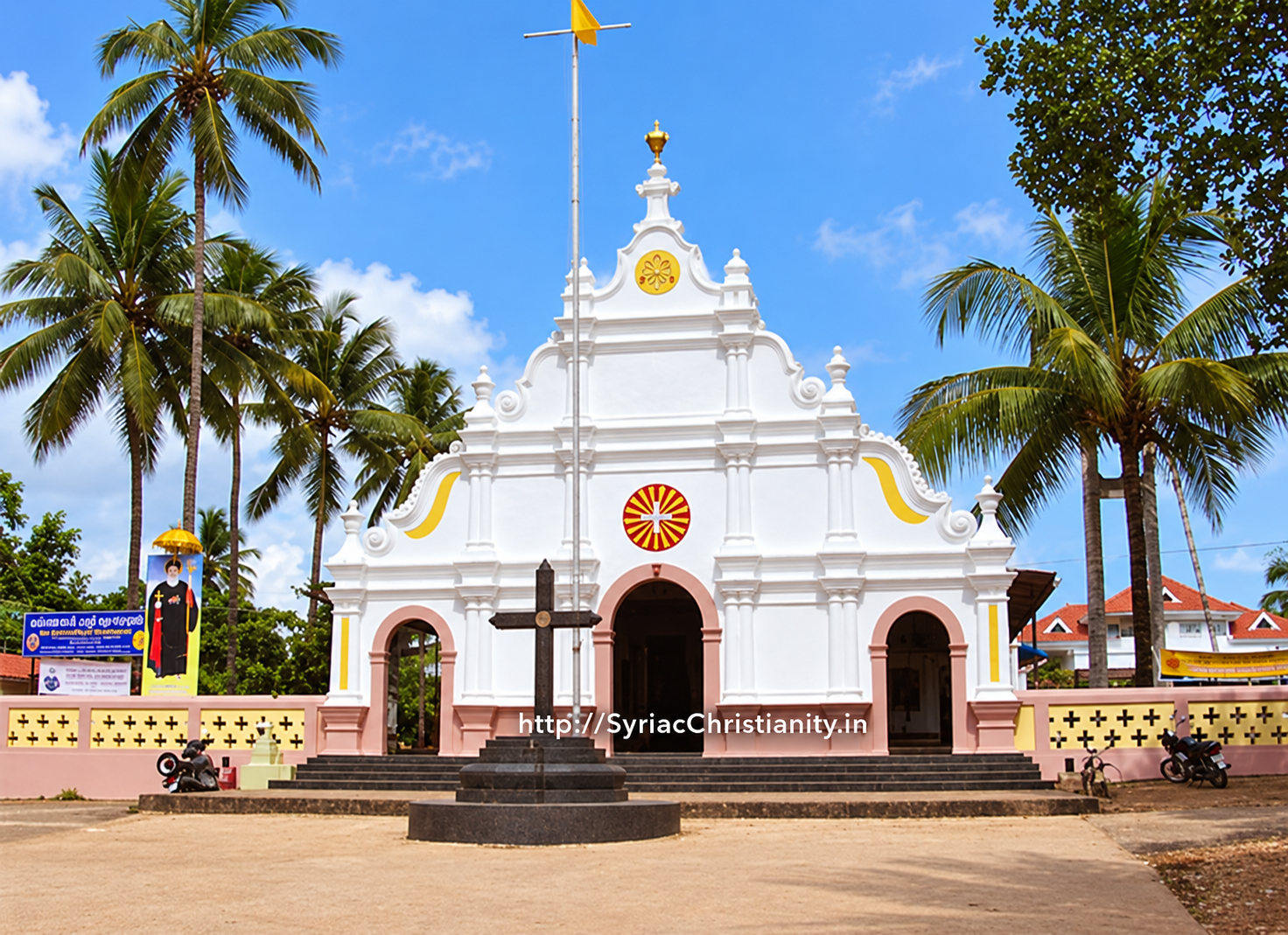 |
In July 1876, His Holiness convened a General Synod of the Syrian Christian community at the church in Mulanthuruthy. The Synod continued for three consecutive days and came to be known as the First Mulanthuruthy Synod. It was a landmark gathering that laid the foundation for a more organized and representative system of administration in the Malankara Church.
One of the most significant decisions of the Synod was the establishment of a representative body for the Malankara Edavaka (Archdiocese), known as the Malankara Jacobite Syrian Christian Association Committee. The Committee consisted of twenty-four elected members and marked an important step towards a representative and participatory form of church administration. The then Metropolitan of Malabar, Mor Dionysius Pulikottil, was given the distinguished title of Malankara Metropolitan and was appointed by the Patriarch as President of the Association.
The Synod also resolved to divide the Malankara Archdiocese into six ecclesiastical divisions, with a Metropolitan appointed to oversee each division under the authority of the Malankara Metropolitan. These measures established a more structured system of pastoral and administrative oversight and strengthened the organizational foundations of the Church.
Chathuruthy Geevarghese Ramban, later revered as St. Gregorios of Parumala, served as the private secretary of His Holiness during the Patriarch’s stay in Malankara and played a key role in coordinating the Synod. His close association with the Patriarch continued in the months that followed.
On 27 August 1876, at Mulanthuruthy Church, His Holiness consecrated Holy Myron for the first time in India. Chathuruthy Ramban was once again privileged to assist the Patriarch in this historic liturgical service. In the months that followed, His Holiness consecrated six Metropolitans for the newly organized ecclesiastical divisions. Among them was Chathuruthy Ramban, who was consecrated with the episcopal name Mor Gregorios (1848–1902). Mor Gregorios, later known as St. Gregorios of Parumala, became one of the most revered saints of the Malankara Church. His life of holiness, prayer, and pastoral service left an enduring spiritual legacy, and his memory continues to be cherished by the faithful throughout Malankara.
Before the arrival of the Patriarch, the Jacobite Church in Malankara appeared to be facing the very real prospect of gradual decline and even disappearance. Yet, in less than two years, His Holiness succeeded in rebuilding the Church on foundations that were stronger, broader, and more firmly established. He undertook a comprehensive renewal of the Church’s spiritual and administrative life. Long-standing abuses and irregularities that had gradually entered the religious practices of the faithful were addressed and removed with remarkable ease. Even practices to which the people had previously shown strong attachment were corrected without provoking significant opposition, discontent, or resentment. Among the important reforms introduced during this period was the requirement that candidates seeking ordination for parish ministry should be married. This measure was intended to ensure that those entrusted with pastoral responsibilities were firmly rooted in family and community life and able to serve the faithful in their parishes with greater stability and commitment.
The Patriarch was a complete stranger to the customs and circumstances of this country when he first arrived in Malankara. He did not know a single word of English, nor was he familiar with the political, social, or ecclesiastical landscape he was about to encounter. When he embarked upon this memorable journey, he had no assurance of any human agency that could guide or support him. Yet, almost single-handedly, he confronted and overcame the formidable obstacles that stood in his path. In the face of difficulties that appeared nearly insurmountable, His Holiness displayed extraordinary courage, determination, and leadership. His commanding presence and indomitable spirit enabled him to accomplish what few could have imagined possible.
His journey and achievements in Malankara stand as a remarkable chapter in Syrian Christian history. Within the span of his historic visit, he left an enduring imprint on the life and organization of the Church. By his vision, courage, and unwavering determination, Patriarch Peter IV emerged as one of the most remarkable figures in the recorded history of the Syrian Orthodox Church.
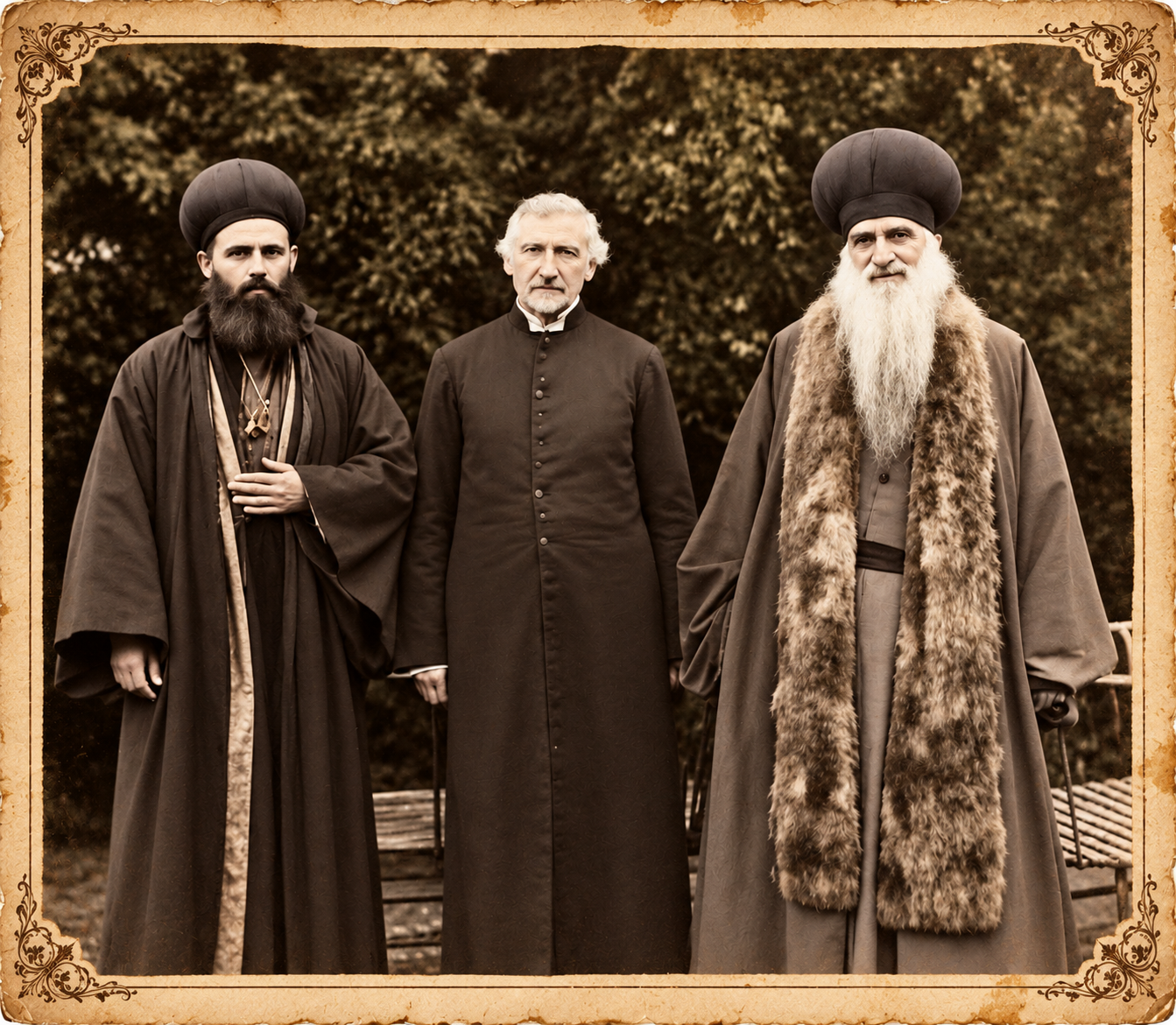
H.H. Patriarch Ignatius Pathros IV (right) along with
Mor Gregorios Abded' Aloho (later Patriarch Ignatius Abdulla II) & Archbishop of Canterbury
|
|
Patriarch returns from Malankara
After nearly two years of fruitful labour in Malankara—defending the integrity of the Orthodox faith and establishing a more representative and organized system of administration for the Malankara Archdiocese—His Holiness the Patriarch departed from Bombay for Jerusalem in May 1877.
On his return journey, His Holiness visited the Syrian churches in Egypt, strengthening his pastoral ties with the communities there. He then proceeded to Constantinople, where he established a new church dedicated to the Mother of God. During his stay in Constantinople, Ramban Elias, who would later become Patriarch of Antioch and All the East as His Holiness Mor Ignatius Elias III, stayed with him for a period. From Constantinople, the Patriarch proceeded to the historic Mor Hananyo Dayro (Deir al-Zaʿfaran Monastery), the ancient seat of the Patriarchate. There, he once again consecrated Holy Myron for the Church.
His Holiness spent the remaining years of his life at Mor Hananyo Dayro, devoting himself to prayer, spiritual leadership, and the service of the Church. Thus, the final years of his life were spent in the quiet surroundings of the ancient monastery where his own spiritual formation had begun.
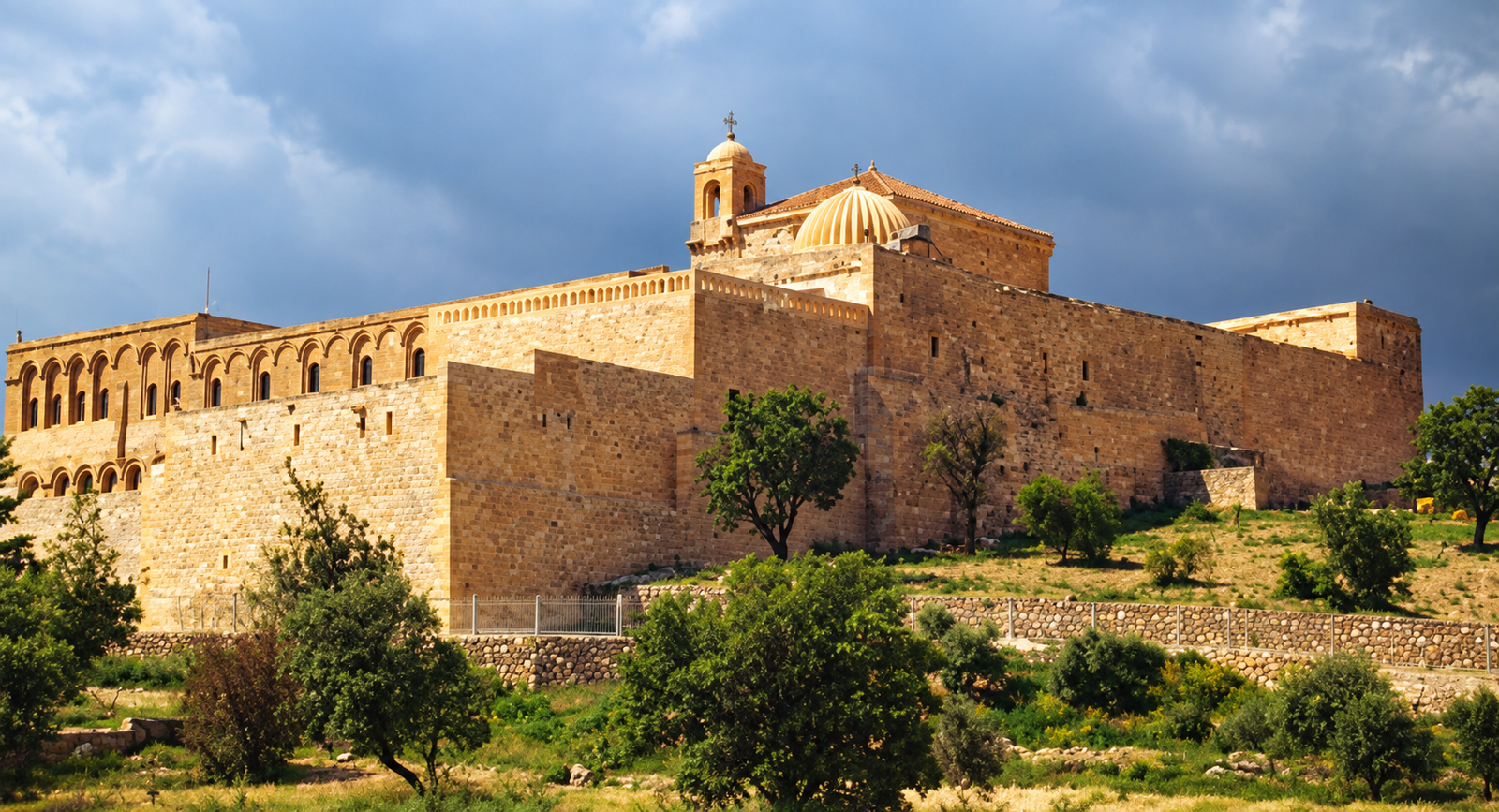
At 4:00 a.m. on Monday, 8 October 1894, Moran Mor Ignatius Pathros IV passed away at the age of approximately ninety-six. With his death, the Syrian Orthodox Church lost a patriarch whose long ministry had left an enduring mark on its spiritual, ecclesiastical, and institutional life. The mortal remains of the holy Patriarch were laid to rest at Mor Hananyo (St. Ananias) Dayro, also known as Kurkkuma Dayro or the Deir al-Zaʿfaran Monastery. (This ancient monastery, closely associated with the history of the Syrian Orthodox Patriarchate, is situated in present-day southeastern Turkey).
|
Monastery of Mor Hananyo (St. Ananias) where the Patriarch's mortal remains were interred |
 |
References:
|
1. Rev. Fr. (Dr) K M Rajan: Biography of church fathers (Malayalam), 2003 |
|
3. M P Varkey: "Malankara Edavakayute Mor Divanasios Metrapolita", 1901 |
|
5. Hollerweger Hans: “Living Cultural Heritage – TURABDIN”, 1999 |
|
6. Christine Chaillot: “The Syrian Orthodox Church of Antioch and all the East”, 1998 |